Omniscient is the screen you work in.
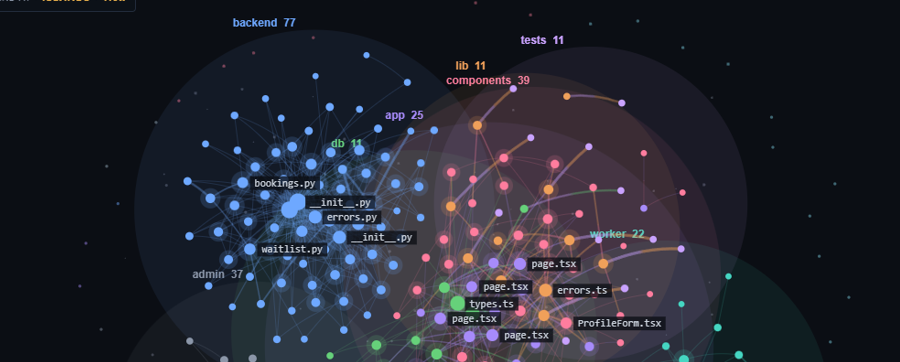
Everything AmbitGraph learns about your repository arrives here: the whole map, the library and the search, on one screen. One command opens it.
Omniscient, and what runs underneath it
Two different things, worth telling apart. Omniscient is what you look at. The services are what do the work.
Omniscient — what you see
One screen holding the map, the library and the search. It displays what the services found and lets you move through it. This is the part you touch.
The services — what works
They run underneath and write what Omniscient shows. You do not operate them directly; you see their results.
The services, named
The scan
Reads your code and resolves which file reaches which. Plain reading, no model.
The map
Turns what the scan resolved into the graph and the library you can move around in.
Telegraph in testing
Coordinates responsibility across streams, models and developers. See Telegraph →
Start from a name
If you know the name
Type part of it and the map flies there. The search knows every unit the scan read, not just file names, so a function you half-remember is enough to find the file it lives in.
If you do not
The whole map is the starting point instead. Narrow by language, by folder, or by how connected something is, until the part you want is the part you are looking at.
What a file's page tells you
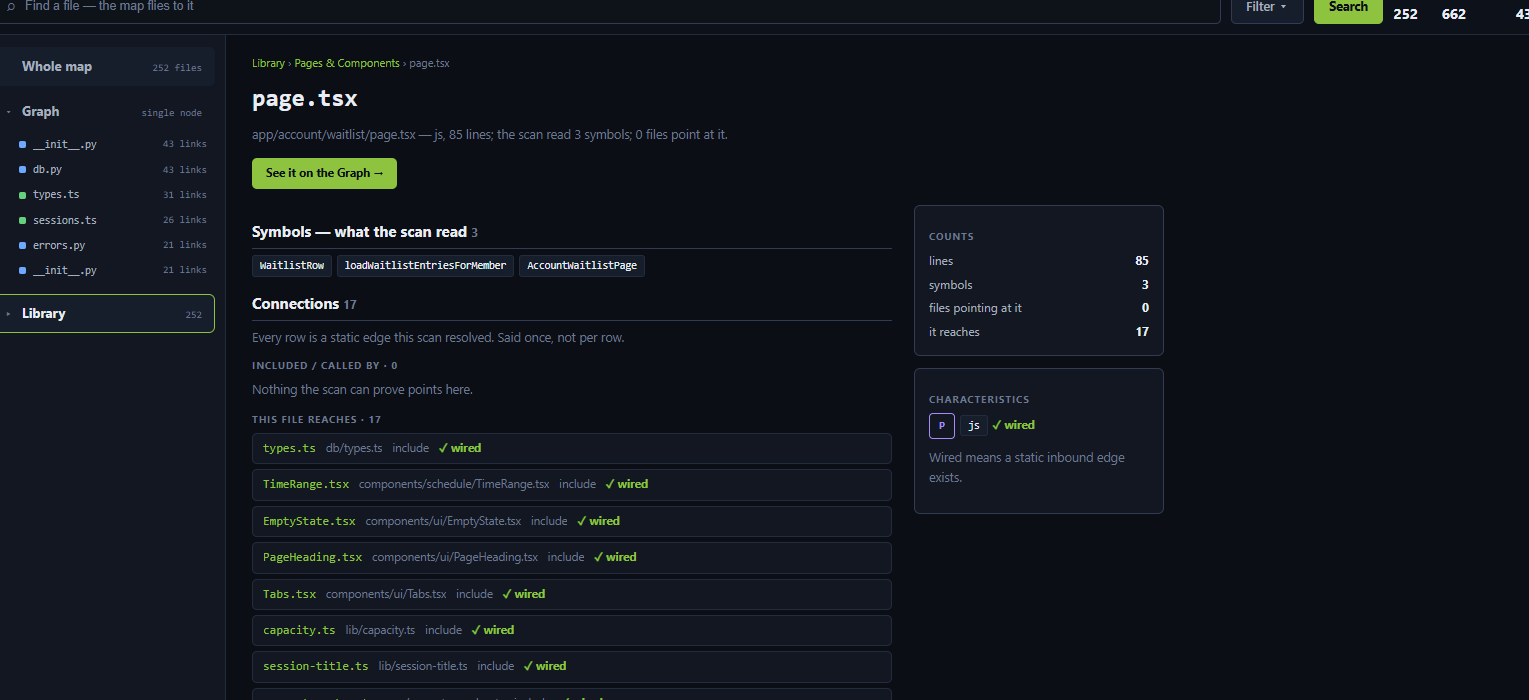
Open any file and you get what the scan actually found in it — never a summary, never a guess.
Symbols
What the scan read inside the file — the functions and components it could name.
Connections
Every resolved edge, said once rather than once per row, split into what points at this file and what it reaches.
Counts
Lines, symbols, files pointing at it, files it reaches. Four numbers that tell you how load-bearing it is.
Characteristics
Its language, and whether anything actually points at it. A file nothing reaches is worth knowing about.
The numbers are the scan's, not ours
Files, edges and orphans sit across the top of Omniscient, computed from your repository. They are what this scan of this code produced — no benchmark, no comparison, nothing averaged from anyone else's code.
It runs where your code is
Omniscient is served from your own machine. It writes what it needs to your application data folder, never inside your project, and it makes no changes to your code. It comes in light and dark. It stops by itself 30 minutes after you close the tab, or you can stop it straight away: